
Coke Jaw
Coke Jaw and What Cocaine Really Does to Your Mouth
Coke jaw is the involuntary clenching, grinding, and side-to-side jaw movement that shows up during and after cocaine use. If you found this page because your jaw aches, or because you keep noticing someone grinding their teeth on nights out, this guide explains what causes it, how long it lasts, and what it usually means.
What Coke Jaw Is
Coke jaw is a slang term, not a diagnosis. It covers a cluster of effects: jaw clenching, teeth grinding (dentists call it bruxism), tension and soreness in the jaw muscles, and the restless chewing or swinging motion sometimes called gurning.
It shows up while the drug is active and often lingers into the next day or two as muscle soreness. With regular use it stops being an occasional side effect and becomes a pattern that damages teeth and the jaw joint. This page stays on the jaw; the substance itself is covered on our cocaine page.
Why Cocaine Makes You Clench and Grind
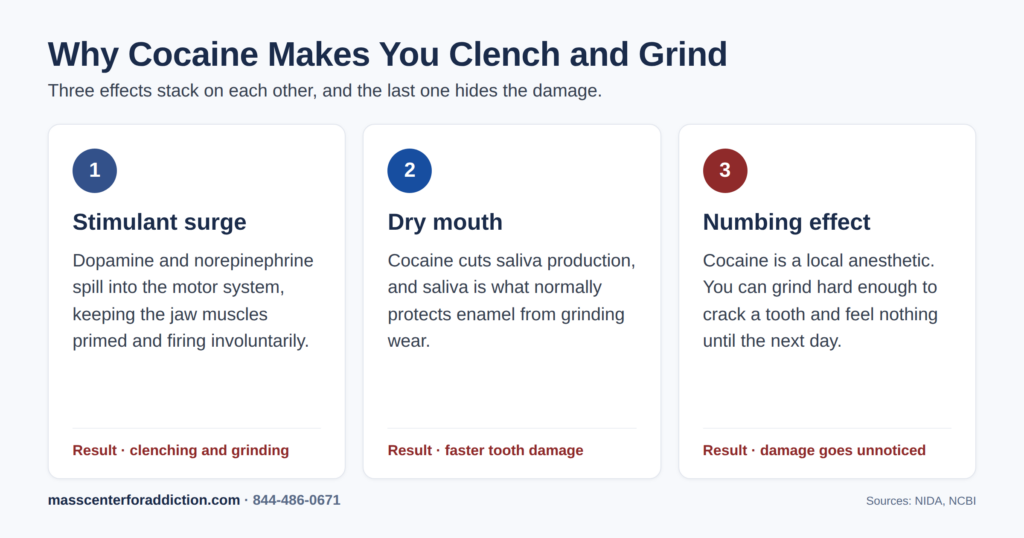
Cocaine floods the brain with dopamine and norepinephrine, the chemistry of stimulation and alertness. That surge does not stay in your mood. It spills into the motor system, keeping muscles primed and firing, and the jaw muscles are among the strongest and most reactive in the body.
Two other effects make it worse. Cocaine dries out the mouth, which makes grinding more damaging because saliva normally protects enamel. And cocaine is a local anesthetic, so it numbs the mouth and jaw while you use it. You can grind hard enough to crack a tooth and feel nothing until the next day.
How Long Coke Jaw Lasts
For occasional use, the clenching itself fades as the drug wears off, within a few hours. The soreness it leaves behind, aching muscles, tension headaches, and a jaw that clicks or feels tired, commonly lasts one to three days.
With frequent use the timeline changes. The jaw muscles stay chronically tight, grinding continues during sleep even on days without cocaine, and problems with the temporomandibular joint (TMJ) can develop. At that point the soreness stops being something that resolves between uses.
The Damage Over Time
| What’s happening | Where it leads |
|---|---|
| Grinding and clenching | Worn enamel, chipped and cracked teeth, flattened bite surfaces |
| Chronic muscle tension | TMJ pain, clicking and locking, tension headaches, facial soreness |
| Dry mouth | Accelerated decay and cavities, gum disease, bad breath |
| Rubbing cocaine on gums | Gum recession and ulcers, damage to the bone under the gumline |
| Snorting | Septum damage and, over time, perforation of the roof of the mouth |
Because cocaine numbs pain and use is often hidden, much of this damage advances quietly. Dentists are frequently the first professionals to spot cocaine use, from wear patterns and gum damage that do not match a person’s age or habits.
Easing a Sore Jaw Right Now
If your jaw is aching after use, warmth helps more than anything: a warm compress on the jaw muscles, gentle stretching, soft foods, and water. Skip chewing gum. It feels like relief but keeps the overworked muscles firing, and it is part of why heavy sessions leave jaws so wrecked.
Be honest with your dentist about use. They cannot protect your teeth from grinding they do not know about, and a night guard can limit damage while you work on the larger issue. The one fix that actually resolves coke jaw is the obvious one, which is stopping the cocaine.
When Coke Jaw Points to a Bigger Problem
A sore jaw after one night is a side effect. A jaw that is sore most weeks is a frequency marker, and frequency is the honest measure of where cocaine use stands. If physical signs are accumulating, the use is no longer occasional, whatever it feels like from the inside.
The crash that follows heavy use, the low mood, exhaustion, and cravings of a cocaine comedown, is part of the same escalation pattern. And in Massachusetts there is a separate reason not to wait: the stimulant supply is increasingly contaminated with fentanyl, which makes every use a higher-stakes event than the last one was.
Treatment for Cocaine Use
There is no medication approved to treat cocaine addiction, so treatment that works is structured and behavioral: contingency management, CBT, and the accountability of an intensive program. At our center in Quincy, that runs through PHP and IOP, with dual diagnosis care for the anxiety and depression that often sit underneath stimulant use.
If the pattern on this page is one you recognize, in yourself or someone you care about, call us and talk it through: 844-486-0671.
Frequently Asked Questions About Coke Jaw
The clenching itself fades as the drug wears off, usually within a few hours. The muscle soreness it leaves behind commonly lasts one to three days. With frequent use, jaw tension and grinding can become chronic and continue even on days without cocaine.
The muscle soreness is temporary, but the damage grinding causes is not. Worn enamel, cracked teeth, and TMJ injury do not reverse on their own. Stopping cocaine stops the progression, and a dentist can repair much of the damage that has already happened.
Cocaine sharply increases dopamine and norepinephrine, which stimulates the motor system along with mood. The jaw muscles respond by clenching and grinding involuntarily. Cocaine also numbs the mouth, so the grinding often continues hard enough to cause damage without the person feeling it.
No. Gum feels like it relieves the restlessness, but it keeps the overworked jaw muscles firing and adds to the strain. Warmth, gentle stretching, soft foods, and hydration help sore muscles recover. Chewing more does not.
Often, yes. Distinctive wear patterns, gum recession where cocaine is rubbed, dry-mouth decay, and damage to the roof of the mouth are recognizable to dentists. Telling your dentist honestly is safer than hoping they will not notice, and it lets them protect your teeth while you address the use itself.
Clinically reviewed by Corey Gamberg, LADC II, Executive Director. This article is for educational purposes and is not a substitute for medical or dental advice. If someone shows overdose signs such as chest pain, seizures, or trouble breathing, call 911 now. For mental health crisis support, call or text 988.


Contact Us

Address
Quincy, MA 02169


Start your recovery with
Massachusetts Center for Addiction
Our team is available 24 hours a day, 7 days a week to answer any questions you may have. Give us a call today and begin your journey toward long-term recovery.