

Oct 12, 2026
Suboxone Side Effects and What to Do About Them
The most common Suboxone side effects are headache, constipation, nausea, sweating, and trouble sleeping. Most are mild and ease within the first few weeks as your dose settles.
The serious risks are fewer and more specific. Mixing Suboxone with alcohol or sedatives can slow your breathing, starting it too early can trigger sudden withdrawal, and the film or tablet can cause dental problems over time.
Below is what the clinical data shows, how long each side effect tends to last, what helps, and which symptoms mean you should call your prescriber or 911.
Common Suboxone Side Effects
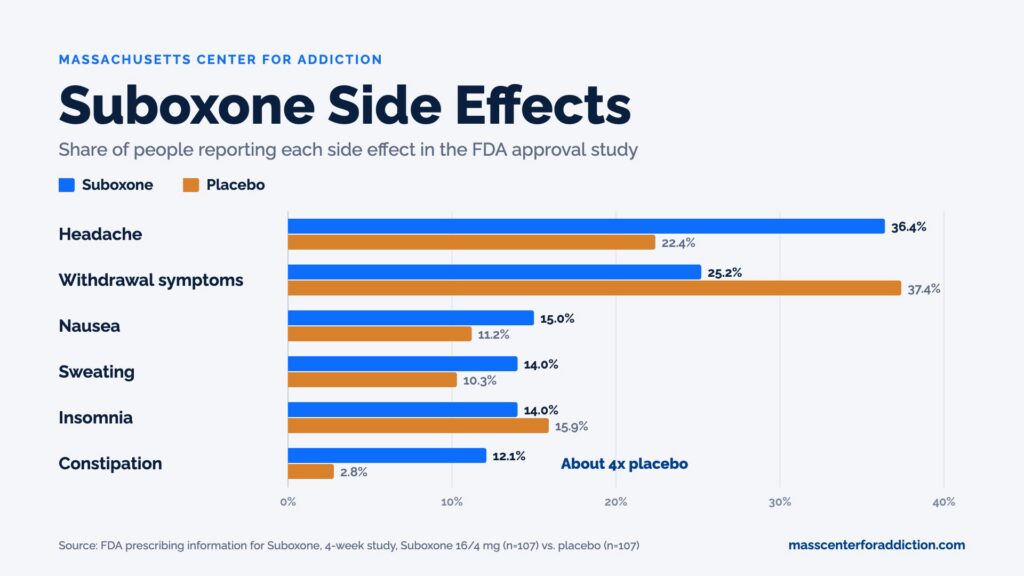
The best data comes from the study the FDA used to approve Suboxone. It compared people taking Suboxone with people taking a placebo for four weeks, and the comparison is the useful part.
| Side effect | Suboxone | Placebo | What it suggests |
|---|---|---|---|
| Headache | 36.4% | 22.4% | More common on Suboxone |
| Withdrawal symptoms | 25.2% | 37.4% | More common on placebo |
| Pain | 22.4% | 18.7% | Slightly more common |
| Nausea | 15.0% | 11.2% | Slightly more common |
| Sweating | 14.0% | 10.3% | Slightly more common |
| Insomnia | 14.0% | 15.9% | About the same |
| Constipation | 12.1% | 2.8% | About 4 times more common |
| Vomiting | 7.5% | 4.7% | Slightly more common |
Source: FDA prescribing information for Suboxone, 4-week study of Suboxone 16/4 mg (107 people) vs. placebo (107 people).
Some complaints show up almost as often on placebo, which means early recovery itself is causing part of them. Insomnia is the clearest example, and withdrawal symptoms were actually more common on placebo because Suboxone was treating them.
Constipation is different. It was about four times more common on Suboxone, and it is the side effect most likely to stick around.
If you take the film or tablet, the FDA prescribing information also lists numbness or burning in the mouth as the most common effect of how it dissolves.
How Long Suboxone Side Effects Last
Headache, nausea, sweating, and sleep problems usually peak in the first one to two weeks. They fade as your body adjusts and your prescriber settles on a stable dose.
Constipation and dental issues can last as long as you take the medication, so they need a plan rather than patience. Drowsiness that continues past the first few weeks is often a sign the dose needs adjusting.
Do not stop Suboxone on your own because of side effects. Stopping suddenly brings on withdrawal and raises relapse and overdose risk, and most side effects can be managed with a dose change or simple fixes.
Does Suboxone Make You Tired
It can, especially in the first days and after a dose increase. Buprenorphine is an opioid, and the label warns it can slow reaction time and impair driving until you know how it affects you.
Tiredness also has other causes in early recovery. Sleep is often disrupted for weeks after stopping other opioids, and depression can look a lot like fatigue.
If you feel heavily sedated, nod off, or feel drunk, tell your prescriber. That usually points to a dose that is too high or another sedating substance in the mix.
Suboxone and Constipation
Opioids slow the gut, and buprenorphine is no exception. In the approval study, 12 percent of people on Suboxone reported constipation compared with about 3 percent on placebo.
What helps:
- More water through the day
- Fiber from food or a supplement, added gradually
- Daily movement, even a short walk
- An over-the-counter stool softener or laxative, after checking with your prescriber
Call your prescriber if you go several days without a bowel movement or have belly pain, bloating, or vomiting.
Suboxone and Your Teeth
In January 2022 the FDA issued a FDA safety warning about buprenorphine medicines that dissolve in the mouth, including Suboxone film. It had identified 305 cases of tooth decay, cavities, oral infections, and tooth loss, 131 of them serious.
The FDA was clear that the benefits of these medicines outweigh the risks. It recommends three habits:
- After the film or tablet has fully dissolved, take a large sip of water, swish it around your teeth and gums, and swallow
- Wait at least one hour before brushing your teeth
- See a dentist soon after starting, and tell them you take buprenorphine
Dry mouth makes the problem worse, so sugar-free gum and staying hydrated help too.
Does Suboxone Cause Weight Gain
Weight gain is not among the common side effects listed in Suboxone’s prescribing information. Many people do gain weight after starting treatment, though, and the usual reasons are appetite returning, regular meals, and more sugar as cravings shift.
For someone who lost weight during active opioid use, some gain is a sign of recovery. If it keeps climbing, a steady routine of meals, sleep, and activity is the fix, and your care team can help with that.
Serious Side Effects to Watch For
These are uncommon, but they are the reason Suboxone is started and managed by a clinician:
- Slowed breathing, mainly when Suboxone is combined with alcohol, benzodiazepines, sleep medications, or other opioids
- Liver problems, which is why the label recommends a liver test before starting and periodically during treatment. Watch for yellowing skin or eyes, dark urine, or pain in the upper right belly
- Allergic reactions such as hives, swelling of the face or throat, or trouble breathing
- Adrenal insufficiency, which is rare and shows up as severe fatigue, weakness, dizziness, and low blood pressure
- Precipitated withdrawal if the first dose is taken too early (covered below)
Precipitated Withdrawal
Buprenorphine binds to opioid receptors more tightly than most opioids but activates them less. If you take your first dose while another opioid is still on those receptors, buprenorphine pushes it off and can trigger sudden, intense withdrawal within minutes.
This is why clinicians wait until you are clearly in withdrawal before the first dose, using a symptom scale rather than guesswork. With fentanyl, which lingers in the body, many clinicians now use lower starting doses or a different start plan.
Precipitated withdrawal is a start-up problem, not an ongoing side effect. Once you are stable on Suboxone it does not happen. The same risk applies to people coming off 7OH and fentanyl.
Can You Drink on Suboxone
No. Alcohol and buprenorphine both slow breathing, and the FDA label warns that combining them raises the risk of overdose and death.
The same applies to benzodiazepines such as Xanax or Klonopin and to sleep medications. If you are taking any of these, tell your prescriber so they can plan for it rather than finding out later.
Our Suboxone vs. methadone guide covers how both medications interact with alcohol.
Long-Term Side Effects of Suboxone
Many people take Suboxone for months or years, and long-term treatment is well studied. The side effects most likely to persist are constipation and dental problems, both manageable with the steps above.
Physical dependence is expected with long-term use. That is different from addiction. It means stopping should be a gradual taper planned with your prescriber rather than a sudden stop.
Your prescriber should also check liver function periodically and review your dose as your recovery changes. If you want to come off Suboxone, our Suboxone withdrawal timeline explains what tapering involves.
Suboxone Side Effects in Women
The common side effects are the same for women and men. Pregnancy is where the questions differ.
The CDC states that medication for opioid use disorder, buprenorphine or methadone, is the recommended treatment during pregnancy and should start as early as possible. Stopping treatment during pregnancy raises the risk of relapse and overdose, which carries its own dangers for the baby.
Babies exposed to buprenorphine may have neonatal opioid withdrawal syndrome after birth, which hospitals monitor for and treat. If you are pregnant or planning to be, tell your prescriber and your OB so they can coordinate care.
Sublocade Side Effects
Sublocade is a monthly buprenorphine injection given under the skin. Its most common side effects, according to its prescribing information, are constipation, headache, nausea, vomiting, fatigue, increased liver enzymes, and itching or pain at the injection site.
Because it is injected, Sublocade avoids the mouth, so it does not carry the dental warning that applies to films and tablets. It can only be given by a healthcare provider, and it must never be injected into a vein.
When to Call Your Prescriber and When to Call 911
Call 911 for slow or shallow breathing, extreme sleepiness or not waking up, blue or gray lips, or signs of a severe allergic reaction. Give naloxone (Narcan) if you have it.
Call your prescriber for drowsiness that is not improving, constipation lasting several days, tooth or gum pain, yellowing skin or eyes, or any side effect that makes you want to stop taking your medication.
Managing Side Effects Within Treatment
At Massachusetts Center for Addiction in Quincy, medication-assisted treatment is managed within our programs where it is clinically appropriate. That means the people adjusting your dose also see how you are doing in therapy week to week.
Most side effects are easier to fix than they are to live with. A dose adjustment, a change in timing, or a simple habit usually takes care of them without putting your recovery at risk.
If you are thinking about treatment for opioid use disorder and want to know whether medication fits, our admissions team can walk you through it and verify your insurance. Call 844-486-0671.
Frequently Asked Questions About Suboxone Side Effects
In the study used for FDA approval, the most common were headache, pain, nausea, sweating, trouble sleeping, and constipation. Several of these showed up nearly as often in people taking a placebo. Constipation stood out, affecting about 12 percent of people on Suboxone compared with about 3 percent on placebo.
Headache, nausea, sweating, and sleep problems usually ease within the first one to two weeks. Constipation and dental issues can continue as long as you take the medication and need ongoing management. Talk to your prescriber before stopping, since a dose change often solves the problem.
It can, particularly in the first days and after a dose increase. Tiredness that lasts beyond the first few weeks, or feeling heavily sedated, often means the dose needs adjusting or another sedating substance is involved. Tell your prescriber.
Weight gain is not listed among Suboxone’s common side effects in its prescribing information. Many people gain some weight after starting treatment as appetite and regular meals return. For people who lost weight during active use, that can be a healthy change.
The FDA warned in 2022 that buprenorphine films and tablets that dissolve in the mouth can cause tooth decay, cavities, and tooth loss. It said the benefits outweigh the risks and recommends rinsing with water after the dose dissolves, waiting an hour before brushing, and seeing a dentist soon after starting.
No. Alcohol and buprenorphine both slow breathing, and the FDA label warns that the combination raises the risk of overdose and death. The same is true for benzodiazepines and sleep medications.
The side effects most likely to persist are constipation and dental problems. Physical dependence is expected with long-term use, so stopping should be a planned taper. Prescribers also check liver function periodically during treatment.
For most people already dependent on opioids, Suboxone at a prescribed dose does not produce a high because buprenorphine’s effects level off at higher doses. People with no opioid tolerance can feel strong effects and are at risk of overdose, which is why it should only be taken as prescribed.
Clinically reviewed by Corey Gamberg, LADC II, Executive Director. This article is for educational purposes and is not a substitute for medical advice. If you are experiencing a medical emergency, call 911. For mental health crisis support, call or text 988.
Sources
- FDA: SUBOXONE (buprenorphine and naloxone) Prescribing Information
- FDA: Dental Problems With Buprenorphine Medicines Dissolved in the Mouth (2022)
- FDA: SUBLOCADE (buprenorphine extended-release) Prescribing Information
- CDC: Opioid Use and Pregnancy
- SAMHSA: Buprenorphine
- Massachusetts Substance Use Helpline


Contact Us

Address
Quincy, MA 02169


Start your recovery with
Massachusetts Center for Addiction
Our team is available 24 hours a day, 7 days a week to answer any questions you may have. Give us a call today and begin your journey toward long-term recovery.